


Auto Motor und Sport All-season tire test 215/40 R18 2024
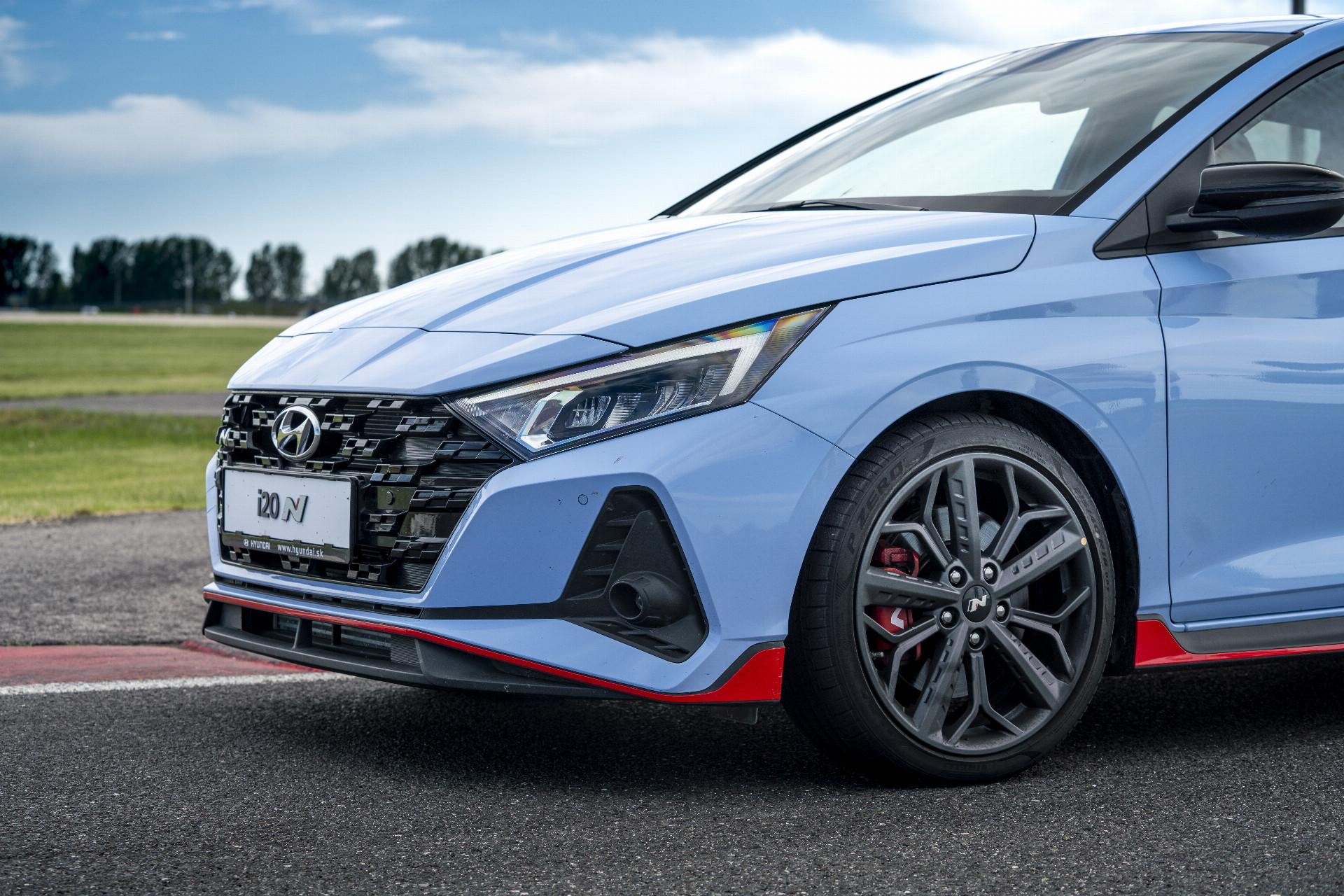
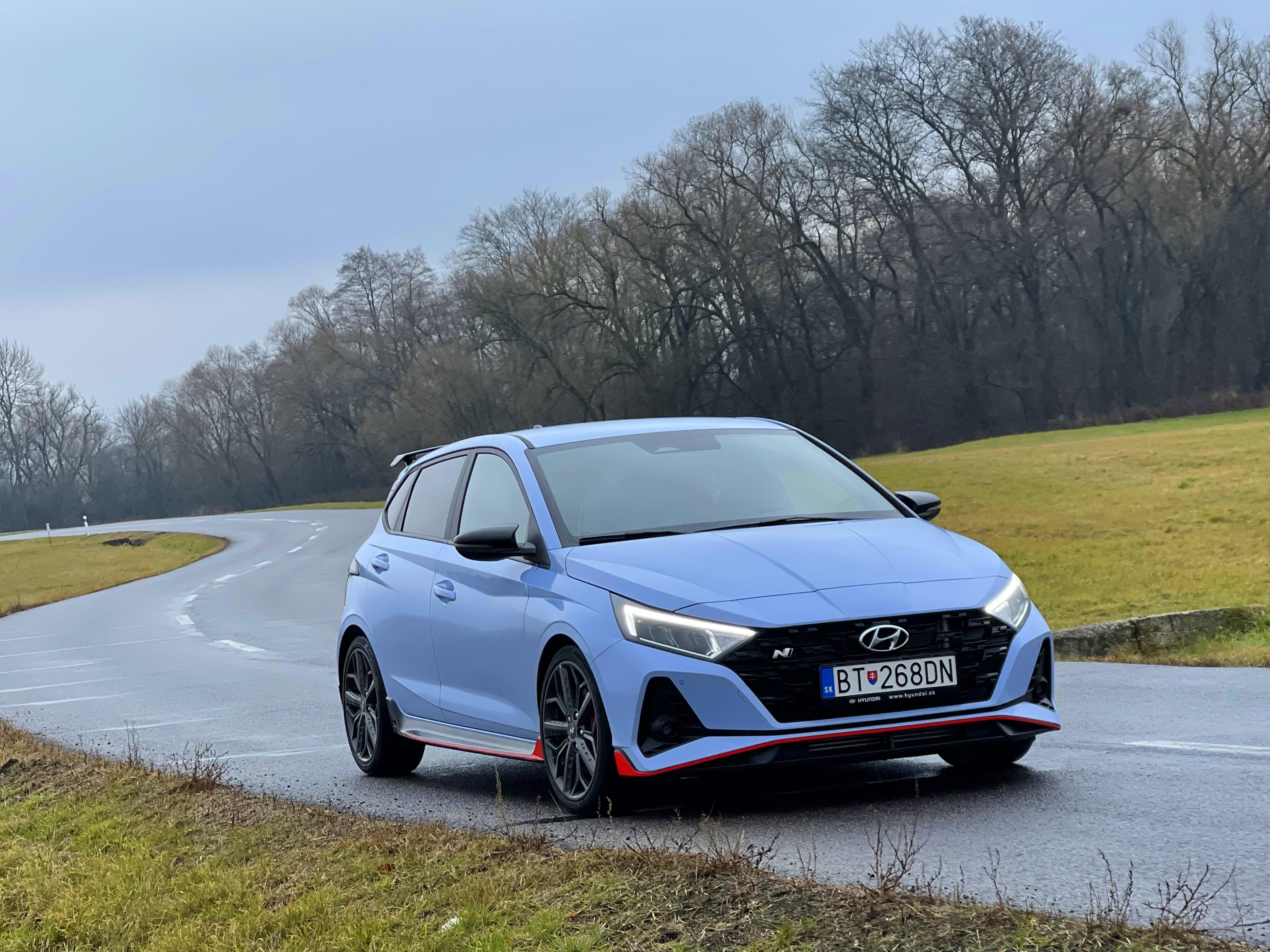
The Sport Auto test evaluated all-season tires on the Hyundai i20N sports car.

Top 3 from the test
You'll find the complete ranking in the "All tyres" tab below.

 Hankook
 Kinergy 4S2
 C
C B
B B (72 dB)
 Test winner
 Continental
 AllSeasonContact 2
CBB (71 dB)
 Bridgestone
 Turanza All Season 6
CBB (70 dB)Build a comparison from this test
Select tyres and metrics — the visualisation redraws instantly.
Top 3 by default. For a clear comparison, max. 5 tyres.
Each metric has its own visualisation. Click a chip to add/remove.
 Braking distance in the wet m · ↓ lower is better
  Braking distance in the dry m · ↓ lower is better
  Noise dB · ↓ lower is better
  Estimated mileage km · ↑ higher is better
 Informácie o teste
Sport Auto all-season tire test
The Sport Auto test evaluated all-season tires on the Hyundai i20N sports car, and included both summer and winter reference tires – although the summer model was the Asymmetric 3, a tire launched more than 10 years ago.
Wet road tests were conducted in cold conditions, well below 10°C (around 7°C when braking). Despite this, many all-season tires outperformed the older summer model, although it is unclear how a modern summer tread pattern would fare.
The test evaluated braking, handling and wet stability, with all results comparing well between the all-season models and the reference tires. This test is a valuable source of information for drivers looking for reliable all-season tires for a sportier driving experience, taking into account the age of the reference summer model.
Dry road – braking from 100 km/h
When braking on dry roads from 100 km/h to 0, the reference summer tire Goodyear Eagle F1 Asymmetric 3 performed best, stopping the vehicle after just 35.3 meters. At the opposite end , the reference winter tire Goodyear UltraGrip Performance 3 finished with 43.4 meters, an 8.1 meter longer braking distance, which can be decisive in critical situations.
All all-season tires placed between these extremes, with the Michelin CrossClimate 2 coming closest to a summer tire with a braking distance of 37.2 meters – a very solid result that confirms that modern all-season tires can be safe even on dry surfaces.
Dry road – handling
In the dry handling test, the reference summer tire Goodyear Eagle F1 Asymmetric 3 again led, reaching an average speed of 101.2 km/h. The slowest was the winter tire Goodyear UltraGrip Performance 3 with an average speed of 97.6 km/h, 3.6 km/h slower .
Among all-season tires, the Continental AllSeasonContact 2 performed best with 100.4 km/h, which shows that modern all-season tires can offer handling very close to summer tires in dry conditions.
Wet roads – braking, handling and aquaplaning
Wet road tests yielded interesting results, with some all-season tires even outperforming reference summer and winter models.
When braking from 80 km/h to 0, the Bridgestone Turanza All Season 6 led with a braking distance of 31.9 m, while the reference summer tire needed 35.2 m, 3.3 m longer. The winter tire came in the middle with a result of 34.3 m .
In the wet handling test, the Continental AllSeasonContact 2 was the best with an average speed of 79.9 km/h, while the reference tires achieved 77.8 km/h. The difference between the best and the weakest model (Michelin CrossClimate 2, 77.4 km/h) was only 2.5 km/h, which indicates that modern all-season tires have a very good balance when driving on wet roads.
In the aquaplaning tests, the winter tire performed best, leading both in straight-line (77.2 km/h) and cornering (2.67 m/s²). The summer tire also performed surprisingly well, while the all-season tires lagged behind - the Vredestein Quatrac Pro Plus showed the greatest weakness in straight-line aquaplaning (71.1 km/h).
Snow – winter performance of all-season tires
The snow tests clearly showed how big the difference is between summer and winter tires in cold conditions. The winter reference tire dominated all tests – stopping the vehicle from 50 km/h in just 24.4 m, while the summer tire needed 52.9 m, more than double the distance. When it came to handling on snow, the difference was even more dramatic: the winter tire reached 50.4 km/h, while the summer tire only reached 14.3 km/h, which is dangerously slow.
All-season tires performed very well in the snow, achieving approximately 90% of the performance of a winter tire. The Hankook Kinergy 4S2 was particularly strong, excelling in all snow tests and showing that modern all-season tires can provide sufficient winter performance for mild climates .
Test conclusion: Sport Auto 2024 – all-season tires
The Sport Auto 2024 test with the sporty Hyundai i20N provided clear evidence that modern all-season tires can compete with traditional summer and winter models in many situations. In dry tests, the all-season tires were close to the summer reference tires, with the Continental AllSeasonContact 2 leading in handling and the Michelin CrossClimate 2 with very short braking distances.
On wet roads, all-season tires often outperformed the reference summer tire – for example, the Bridgestone Turanza All Season 6 had a shorter braking distance than the summer model – and the Continental AllSeasonContact 2 dominated in handling.
In the snow, all all-season tires performed solidly, achieving approximately 90% of the performance of the winter reference tire, with the Hankook Kinergy 4S2 excelling in all snow disciplines.
Quietness and ride comfort were balanced across most tires, with the Continental AllSeasonContact 2 being the quietest model, and low energy consumption was confirmed by good results in rolling resistance .
Key recommendation
The Continental AllSeasonContact 2 emerged as the most balanced all-season model with very good performance on dry, wet and snow, while also offering low rolling resistance. The Hankook Kinergy 4S2 is a strong candidate for drivers in regions with snowy winters, while the Bridgestone Turanza All Season 6 and Michelin CrossClimate 2 offer balanced properties for everyday use.
Auto Motor und Sport All-season tire test 215/40 R18 2024
6 products · click a column to sort| # | Tyre | Price from | Dry braking [m] ↕ | Dry manoeuvring [km/h] ↕ | Wet braking [m] ↕ | Wet manoeuvring [km/h] ↕ | Aquaplaning straight [km/h] ↕ | Aquaplaning cornering [m/s²] ↕ | Snow braking [m] ↕ | Snow manoeuvring [km/h] ↕ | Snow traction [N] ↕ | Volume [dB] ↕ | Rolling resistance [kg/t] ↕ |
|---|---|---|---|---|---|---|---|---|---|---|---|---|---|
| 1. | Continental AllSeasonContact 2 ✓ Available in size 215/40 R18 | from 139 € | 39.1 | 100.4 | 33.7 | 79.9 | 72.5 | 2.25 | 26.5 | 48.8 | 1.44 | 71.2 | 8 |
| 2. | Hankook Kinergy 4S2 ✓ Available in size 215/40 R18 | from 112 € | 42.2 | 99.8 | 32.7 | 79.7 | 75.2 | 2.42 | 26 | 49.6 | 1.5 | 71.5 | 8.5 |
| 3. | Bridgestone Turanza All Season 6 ✓ Available in size 215/40 R18 | from 127 € | 38 | 99.6 | 31.9 | 77.8 | 74.2 | 2.13 | 26.9 | 47.7 | 1.48 | 72.5 | 8.5 |
| 4. | Michelin CrossClimate 2 ✓ Available in size 215/40 R18 | from 189 € | 37.2 | 99.2 | 34.1 | 77.4 | 75 | 2.22 | 26.3 | 48.8 | 1.49 | 71.9 | 8 |
| 5. | Goodyear Vector 4Seasons Gen 3 ✓ Available in size 215/40 R18 | from 136 € | 41.7 | 99.4 | 34.5 | 78.8 | 72 | 2.06 | 27.1 | 47.5 | 1.4 | 72.6 | 8.7 |
| 6. | Vredestein Quatrac Pro+ ✓ Available in size 215/40 R18 | from 119 € | 41.7 | 99.5 | 32.8 | 78.2 | 71.1 | 2.06 | 29.3 | 45.9 | 1.34 | 71.5 | 9.8 |
Dry braking [m]

Dry manoeuvring [km/h]

Wet braking [m]
Wet manoeuvring [km/h]
Aquaplaning straight [km/h]

Aquaplaning cornering [m/s²]
Snow braking [m]
Snow manoeuvring [km/h]
Snow traction [N]

Volume [dB]

Rolling resistance [kg/t]

The Sport Auto test evaluated all-season tires on the Hyundai i20N sports car.